What’s new in September
What’s new in September, with links to support, information and other items of interest.
- Opportunities and actions to improve care for endometrial cancer
- Have your say: Upper GI cancer support survey
- New research sheds light on breast cancer treatment resistance
- Online course for health professionals: Cancer care for older adults
- Share your experience: Help researchers understand cancer anxiety
- Q&A – Side effects of breast cancer treatment
Opportunities and actions to improve care for endometrial cancer
The Victorian Integrated Cancer Services (VICS) have published two key outputs from their recent consultation with clinical experts and people affected by endometrial cancer. An assessment report describes barriers and enablers to delivering optimal care, highlights patient experiences, and identifies 22 unwarranted variations in treatment and outcomes across Victoria. The Endometrial Cancer Action Register lists 32 practical actions that the VICS, their member health services, and other partners can take to address the identified variations and improve quality and equity of care.
You can find both documents, with a video of the consultation co-chairs introducing the action register, on the VICS website.
Have your say: Upper GI cancer support survey
Pancare Foundation is inviting people affected by upper gastrointestinal (GI) cancers—including oesophageal, stomach, liver, biliary, or pancreatic cancer—to take part in an anonymous online survey. Whether you’re a patient, family member, friend, or carer, your feedback will help shape future support services and resources. The survey takes 15–30 minutes and closes at 5pm on 8 September.
Read more and take part via the survey website.
New research sheds light on breast cancer treatment resistance
Scientists at the Garvan Institute have discovered why some common breast cancers stop responding to treatment. They found that a natural stress response in cells—called the JNK pathway—can be switched off in certain cancers. When this happens, treatments that usually stop cancer from growing don’t work as well.
This discovery could help doctors predict which patients might not respond to current therapies and offer them better options. It’s a step toward more personalised treatment for people with estrogen receptor-positive (ER+) breast cancer, which makes up about 70% of all breast cancer cases.
Read the full report on the news and resources page on the Garvan Institute website.
Share your experience: Help researchers understand cancer anxiety
Researchers from the University of Melbourne are inviting participants to take part in a study that explores how psychological factors such as personality traits, emotions, and beliefs may contribute to anxiety, depression, and disordered eating. The study focuses on individuals living with cancer, multiple sclerosis, or an eating disorder, and compares results with those who do not have a chronic illness. Participation involves completing a series of confidential online questionnaires over several months. As a thank you, participants will have the chance to win e-gift cards after each stage of the study. Questionnaires can be completed on a phone or computer, and all data will remain confidential.
Learn more or take part on the Melbourne University study webpage.
Online course for health professionals: Cancer care for older adults
The University of Melbourne is running an online course designed to help health professionals better support older adults diagnosed with cancer. The course covers key topics like communication, treatment planning, psychosocial support, and advanced care needs. It’s ideal for anyone working with older patients, including nurses, GPs, and carers. What’s more, the course is accredited by the Australian College of Nursing and RACGP, offering practical tools and insights to improve care and confidence when supporting older people affected by cancer.
Learn more on the Future Learn website.
Q&A – Side effects of breast cancer treatment
Breast Cancer Trials is hosting a free online Q&A on Wednesday 24th September, 5:00–6:30 PM (AEST), exploring the side effects of breast cancer treatment and the latest research aimed at improving quality of life. Led by a panel of experts and moderated by journalist Annabel Crabb, the session will cover clinical trials, strategies for managing physical and emotional side effects, and insights from lived experience. Open to patients, carers, and health professionals.
Register via the Breast Cancer Trials website.
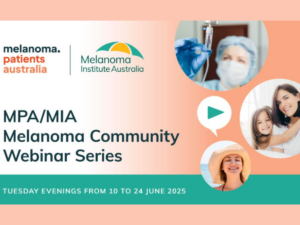 Join Melanoma Institute Australia (MIA) & Melanoma Patients Australia (MPA) for an informative series of three live Tuesday evening webinars (7.00pm-8.00pm AEST) for patients with melanoma and their carers.
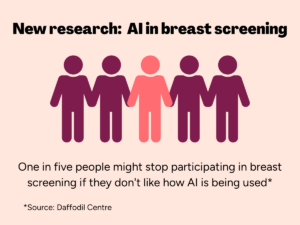 AI is reshaping healthcare—including how we screen for breast cancer. Tools like AI-assisted mammography reading could make screening faster and more accurate.
 Your story can help shape the future of healthcare in Victoria.
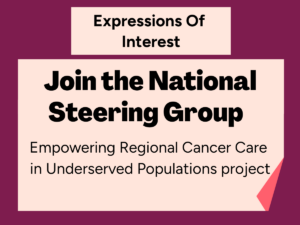 VCCC Alliance are currently inviting Expressions of Interest from individuals across Australia to join the National Steering Group for the Empowering Regional Cancer Care in Underserved Populations project. They are particularly seeking consumer advocates, allied health professionals, nurses, medical staff, researchers, and clinicians who are passionate about shaping and guiding the educational needs of Australia’s regional, rural and remote cancer workforce.
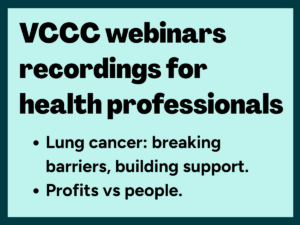 VCCC have added 2 recently recorded webinars to their library. See details on them below.
 Join Cancer Council Victoria’s one-day, in-person workshop designed for health professionals to enhance their communication skills with cancer patients. Participants will explore emotional reactions to cancer, recognise and respond to emotions effectively, and receive personalised feedback in a safe environment. The workshop will be held on 3 July and 28 July (same content).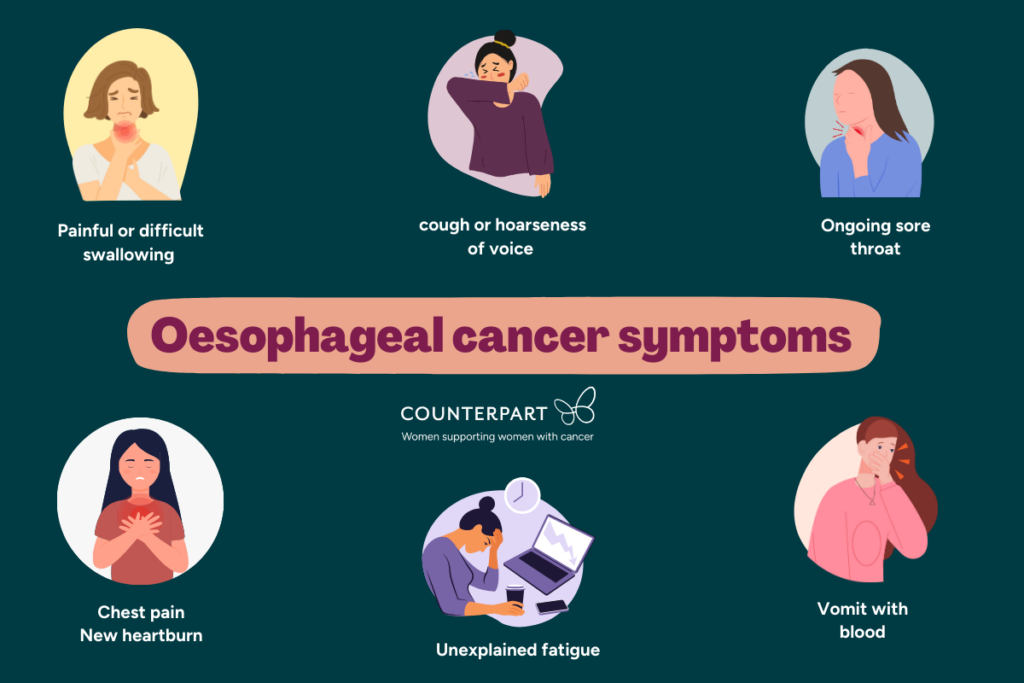
 This online event, presented by Dr Rosalie Power, will explore the unique challenges faced by LGBTIQ+ individuals in cancer care. The findings, based on the Out with Cancer study, are drawn from surveys of 430 LGBTIQ+ cancer patients, 131 informal carers and 357 healthcare professionals.
 If you or someone you care for has experienced cancer treatment in rural or remote Australia, Deakin University and Equitable Cancer Outcomes across Rural and Remote Australia (ECORRA) would appreciate hearing your story. With a genuine rural and remote focus, ECORRA is one of Australia’s leading research groups dedicated to reducing geographical inequities in all areas of cancer care. Taking part in this study would help in their aim at improving cancer care in rural and remote health services.
 Cancer Australia is pleased to announce the development of two new
  iCare is a new interactive web-based portal to improve symptom management and wellbeing for people diagnosed with upper gastrointestinal or hepato-pancreato-biliary cancers and their carers. This personalised program offers a comprehensive selection of interactive modules and provides information and access to resources needed during a cancer diagnosis. Currently seeking input from those who would use the platform, the iCare portal is being trialed among people living with upper gastrointestinal or hepato-pancreato-biliary cancer.
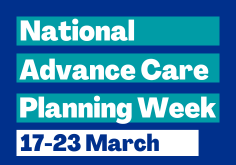 Advance care planning involves making decisions about your future health care in case you become seriously ill and unable to communicate. It ensures that your loved ones and health care providers understand and respect your treatment preferences. Creating a documented plan improves ongoing and end-of-life care, ensures you receive the care you want, and reduces stress and anxiety for both you and your loved ones, especially during the difficult circumstances of being extremely unwell.
 The Doherty Institute is currently seeking a community member to join their Community Advisory Board (CAB). The CAB plays a crucial role in supporting the Institute’s work by providing a voice for individuals who have been affected by or are at increased risk of infectious diseases, immune-related disorders, or illnesses where immunotherapy is vital, such as cancer.